
This is a Lace Monitor taken in the Grampions in Victoria. This was the first goanna that I encountered in the wild. (taken Mar2002) In a country that doesnt have that many large predatory animals it makes seeing one of these creatures at close quarters really exciting. Most of these images were taken with telephoto lens...it is not the type of creature I would want to corner or startle. If you want to see a larger image of any of these pics, just double click on them.
In Australia we refer to our monitor lizards as goannas. It might sound like an aboriginal word but it is actually a word early europeans came up with. It is really just a mispronunciation of the word iguanna (another type of large lizard found elsewhere in the world-but belonging to a different family).
There are about 50 species of these lizards world wide and Australia has 26 of them. The largest of one, the perentie can grow to about 2.4 m. They are powerfully built creatures which will readily takes to trees if startled. They live in most parts of the country except Tasmania, where it is too cold for them and while many of them live in desert areas they can also be found around water and in tropical rainforrest.
 Keep River National Park, NT. This is a yellow-spotted monitor (Varanus panoptes ).
 This photo shows the powerful claws used for climbing, digging and defence. It is about the size of a large mans hand.
 A close up of a Lace monitors face. The two yellow bands under its chin are identifying marks for this species. Depot Beach NSW.
 Lace Monitor - Fraser Island Qld.
 Fraser Island, Qld.
 This is a close up of tthe scales of a water monitor. They look more like little beads than scales.
Barcaldine, Qld. (above & below) Spencer's Monitor (Varanus spenceri )

 The Kimberley, WA. Yellow-Spotted Monitor (Varanus panoptes ).
 Welford NP, Qld. Yellow-spotted monitor. (above & 2 below).

 Derby WA. Freckled Monitor (Varanus tristis)
 Kangaroo Island SA. Heath Monitor (Varanus rosenbergi)
(above & below)

 Cape Tribulation, Qld. Lace Monitor.
 Fraser Island, Qld. Lace Monitor.
 Umbrawarra Gorge, NT. This is a Mertens' Water Monitor. (Varanus mertensi). These monitors spend some of their time in the water looking for food and are good swimmers. After swimming in the cold water this one found itself a hot rock to lay on to warm up again. It flattened itself to get as much contact with the rock as possible. The photos below are of the same lizard. I watched it swim and forage for about 30 minutes and it carried on as though I wasn't there.


 Keep River NP, NT. Mitchell's Water Monitor.

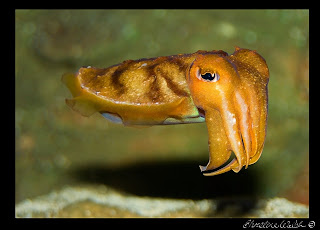

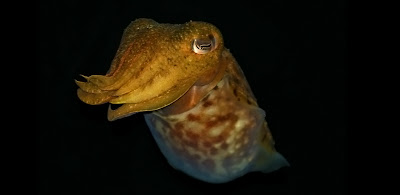
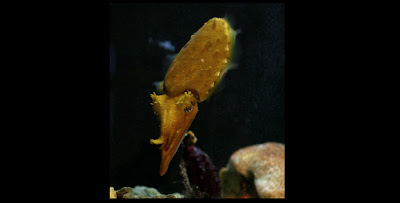
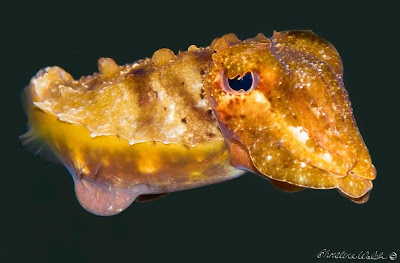 These two photos were taken as it was stalking a fish. They use two specialised tentacles to strike out at their prey after they have stealthfully floated up close to it. On the underside of its body you can see two fins or rudders, which are made out of soft tissue only and it is able flatten them or make them more prominant at will.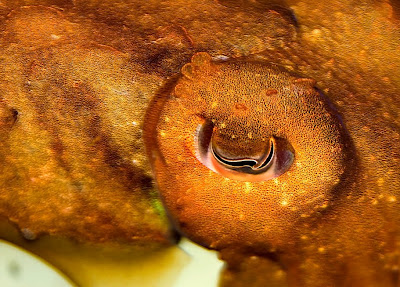


bcc.jpg)
c.jpg)


.jpg)


bc.jpg)


