I recently had the oportunity to take part in a seaweed study trip in Port Phillip Bay, Victoria. We collected a small sample and examined it. We were very lucky to have to highly educated specialists in the field go with us and teach a little of what they know. Gerry has a phd in seaweed study and is very good at identifying visually the plants whereras Huron, the other specailist with us had been working on a project where he was unlocking the DNA codes of algae, this allows us to find out about how closely species are related. There have been surprising results.
Apart from the coastline along Japan, Australias southeren coast has the highest diversity and endism of seaweed any where in the world. And while japans coast is north/south orientation, it has tropical and temperate water so you would expect there to be a diverse range of seaweeds. Our southern coast is temperate so it is of interest to scientists as to why there is so much variation. This is my friend Anne, sorting through the weed we sampled. There are three main types. They are classified by colour: Browns, greens and reds. Sounds straight forward enough. The first thing we learnt was that just because it looks brown...doesnt necessarily mean its a brown seaweed, and same for the others to. The second thing we learnt, jsut because two weeds look different in colour or shape doesnt mean they are'nt the same. Their form might depend on the depth they are growing at or by how much light they get. ...Confused yet? I started to find that even the simplest things I thought I knew about weed were wrong. There are not alot of experts in this field and there are alot of different species to study.
 This is my friend Anne, sorting through the weed we sampled. There are three main types. They are classified by colour: Browns, greens and reds. Sounds straight forward enough. The first thing we learnt was that just because it looks brown...doesnt necessarily mean its a brown seaweed, and same for the others to. The second thing we learnt, jsut because two weeds look different in colour or shape doesnt mean they are'nt the same. Their form might depend on the depth they are growing at or by how much light they get. ...Confused yet? I started to find that even the simplest things I thought I knew about weed were wrong. There are not alot of experts in this field and there are alot of different species to study.
There are many good reasons for finding out more about algae. Seaweeds are used for foods and medicines and with an estimated min 6000 species world wide there is still a lot to be discovered. It is a common ingredient in things like ice cream and toothpaste, not that you can tell.
 This is a decorator crab. They "plant" live weed on themselves which gives them great camoflauge. They are a very gentle crab with tiny claws, much to small to hurt a person.
 This is bryozoan, a colonial tiny animals. you are looking at thousands of them in this picture. This colony is growing on Kelp.
 The curly tendrils on this weed are one of the types of features that specialsit use to identify species.

 These two picture are the little decorator crab at the top of this post. amongst the seaweed they are almost impossible to see. Its only when they move that you notice them.
 This one has an almost beaded appearance.
 The little balls are like little balloons, it helps weed float nearer the surface.
 Some of the patterns that the tips form remind me of looking at fractal patterns.
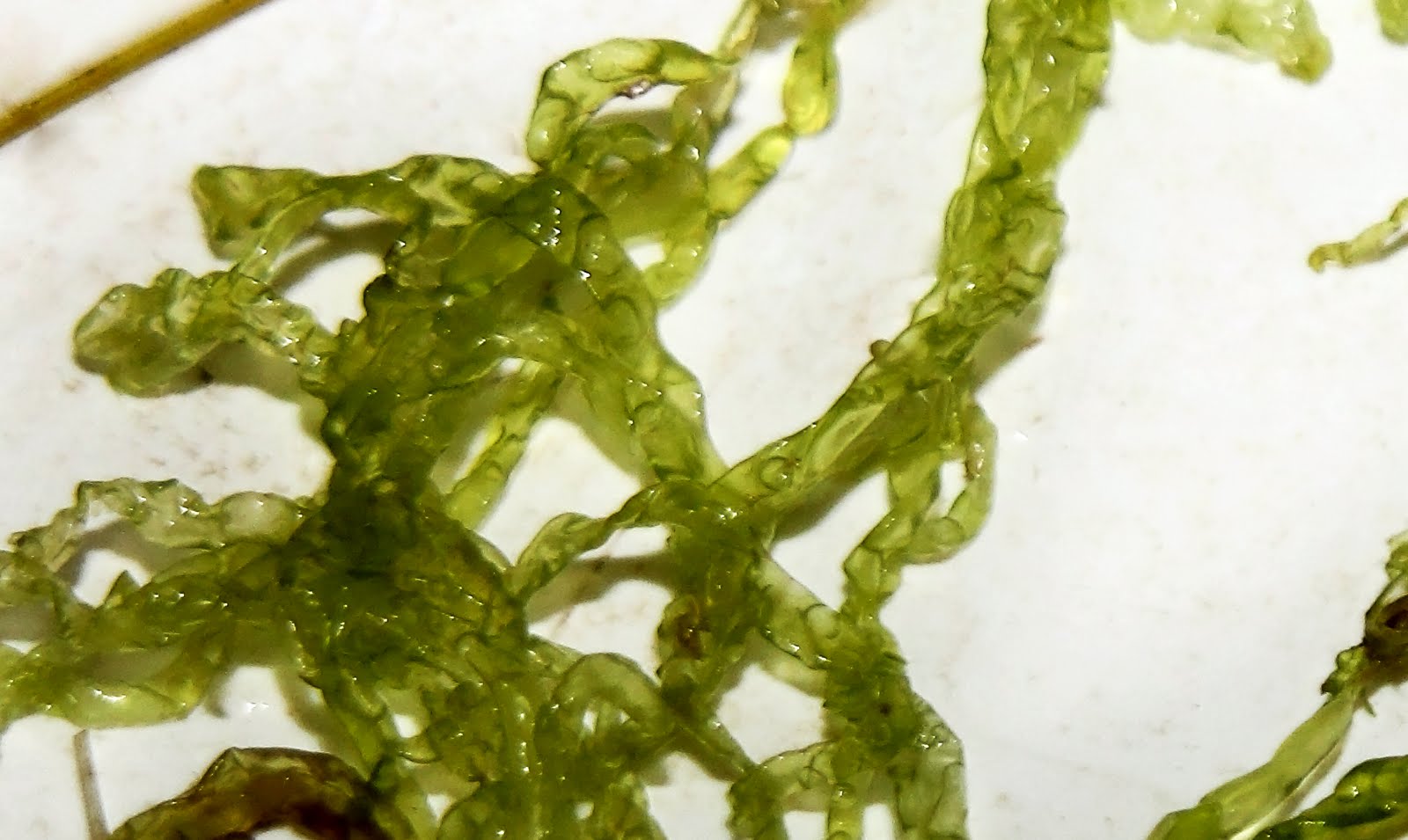
 This known as Sea Lettuce, its edible, but I found it left a really strong after taste so Im not sure I will be adding this to my diet in a big way.


 This is a decorator crab. They "plant" live weed on themselves which gives them great camoflauge. They are a very gentle crab with tiny claws, much to small to hurt a person.
 This is bryozoan, a colonial tiny animals. you are looking at thousands of them in this picture. This colony is growing on Kelp.
 The curly tendrils on this weed are one of the types of features that specialsit use to identify species.
 These two picture are the little decorator crab at the top of this post. amongst the seaweed they are almost impossible to see. Its only when they move that you notice them.
 This one has an almost beaded appearance.
 The little balls are like little balloons, it helps weed float nearer the surface.
 Some of the patterns that the tips form remind me of looking at fractal patterns.
 This known as Sea Lettuce, its edible, but I found it left a really strong after taste so Im not sure I will be adding this to my diet in a big way.


